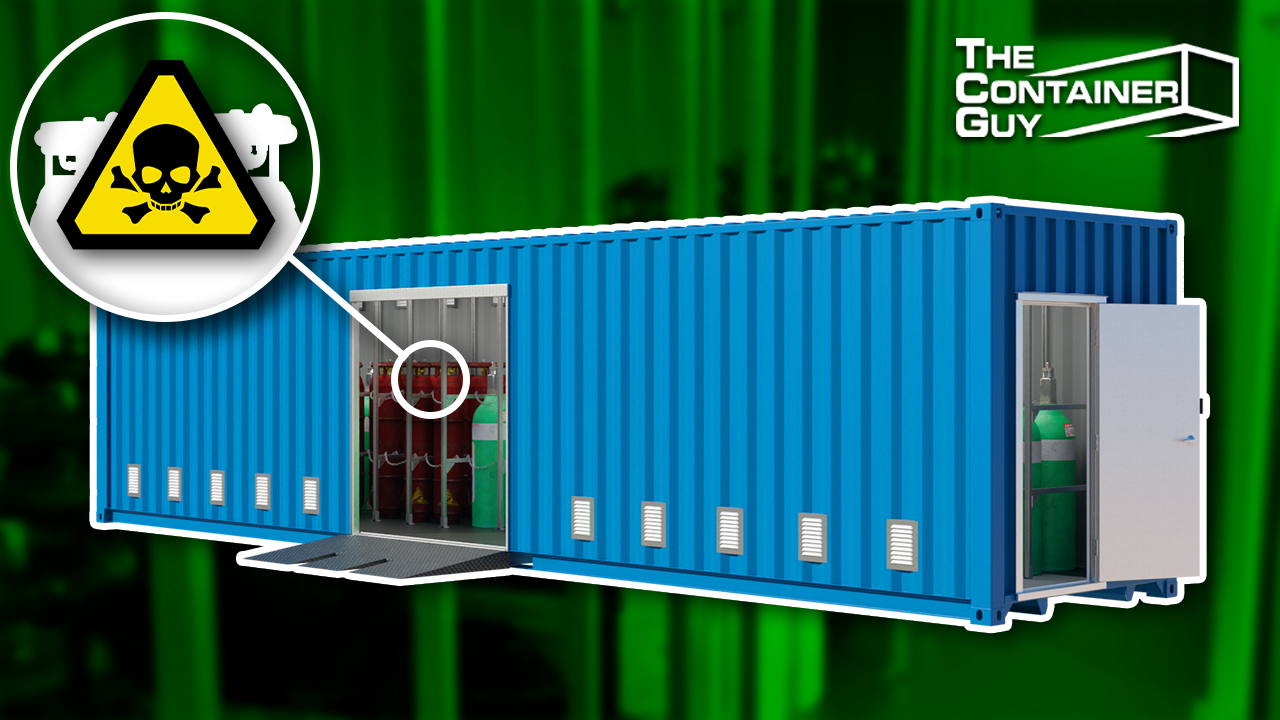
Converting a 40-Foot Shipping Container into a Compressed Gas Storage Shack
In this walkthrough, Channing McCorriston, The Container Guy, demonstrates how a 40-foot shipping container can be converted into a secure and ventilated compressed gas bottle storage unit.
The project was designed to meet a customer’s need for safe, organized storage of compressed gas cylinders while maintaining durability, accessibility, and proper airflow.
Starting with the Right Container
The build begins with a one-time-use 40-foot shipping container. These units typically show minor scuffs and light surface rust from ocean transport, which is normal and expected. Structurally, they remain in excellent condition and are ideal candidates for modification.
Minor cosmetic scratches were touched up during the project to maintain a clean, professional finish.
Interior Strut Lining System
The backbone of the interior design is a full strut lining system.
Strut channels were installed vertically every 22 inches, or every second corrugation, creating defined storage bays along the walls. This setup allows compressed gas cylinders to be chained tightly and securely to the container structure.
To prevent twisting and ensure rigidity, the vertical struts run from ceiling to floor and are reinforced using two-hole gusseted angle brackets. Custom bottom base brackets were bolted into the container floor using 3/8 hex head sheet metal screws, ensuring long-term durability against the container’s hardened flooring.
The result is a solid, modular system capable of supporting multiple cylinders per bay.
Adjustable Laser-Cut Hook System
One of the most innovative features of this build is the custom laser-cut hook system.
These hooks slot directly into the strut channels and can be positioned every 1.5 inches. This allows flexible chaining locations depending on the number and size of gas bottles being stored.
The system is quick to install, highly durable, and easily adjustable. Customers can modify their layout as storage needs change without cutting or welding.
Cross-Flow Ventilation for Hazardous Storage
Proper ventilation is critical when storing compressed gases.
Multiple high and low BigAir® vents were installed on both sides of the container to create effective cross-flow ventilation. This design ensures that gases are expelled regardless of whether they are heavier or lighter than air.
High vents allow lighter gases to escape, while low vents allow heavier gases to vent out. Together, they maintain continuous airflow and improve safety inside the storage unit.
Roll-Up Door Installation
A centrally located roll-up door was installed along one side of the container.
The door frame was carefully marked and positioned between two outer corrugations to create a seamless fit. The framing kit matched the container’s exterior color, minimizing the need for paint correction.
A heavy-duty ramp was added to simplify loading and unloading of gas bottles.
The precision of the door cut was emphasized to prevent unnecessary paint burn and reduce post-installation touch-up work.
Man Door and Security
A man door was installed in the end wall of the container using a precisely cut rough opening.
While customers can source North American door slabs locally, this project used a Chinese slab fitted with a high-security lock box. This added protection enhances overall site security without overcomplicating the installation.
Together, the roll-up door and man door provide both operational access and daily convenience.
Structural and Finish Details
After cutting door openings, exposed areas were inspected and touched up with paint to protect against corrosion.
The build highlights an important reality: even new containers often show signs of wear from shipping. Addressing minor cosmetic issues is part of delivering a finished product that looks professional and performs reliably.
Final Outcome
This project successfully transforms a standard 40-foot shipping container into a secure, ventilated compressed gas storage facility.
By combining:
-
A modular strut lining system
-
Adjustable laser-cut chain hooks
-
Cross-flow ventilation
-
Reinforced vertical framing
-
Precision-cut roll-up and man doors
The result is a safe and adaptable storage solution tailored to hazardous material handling.
The modular design allows future reconfiguration, while structural reinforcements ensure long-term durability. It is a practical example of how thoughtful engineering and refined installation techniques can convert a basic container into a purpose-built industrial asset.